Tattoo Pain Chart: Which Spots Hurt Most
If you are thinking about getting a tattoo, pain is probably the first thing on your mind — and honestly, that is a smart thing to research. Every body part feels different under the needle, and knowing what to expect can turn a nerve-wracking first session into a confident, comfortable one. This guide breaks down exactly which spots hurt most and which are surprisingly manageable.
We have tattooed everything from outer thighs to ribcages, and this pain chart reflects real-world experience: how skin thickness, nerve endings, and bone proximity shape the sensation you will feel. Below you will find a full body-area ranking, why placement matters so much, and practical pain management tips that actually work.
How Tattoo Pain Actually Works
A tattoo machine drives needles into the dermis — the middle layer of skin — between 50 and 3,000 times per minute. Your pain level depends on three things: how many nerve endings live in that spot, how much flesh cushions the bone, and how sensitive the skin is to begin with. Areas with thick skin and plenty of muscle or fat (like the outer thigh) feel more like a dull scratch. Areas with thin skin stretched over bone (like the ribs or feet) feel sharp, intense, and impossible to ignore.
Pain also changes during a single session. The first 15 minutes often feel the worst as your body registers the sensation, then adrenaline and endorphins kick in and things dull down. Around the 2–3 hour mark, though, most people hit a wall — fatigue sets in and even easy spots start to sting. That is why shorter first sessions are such a good idea.
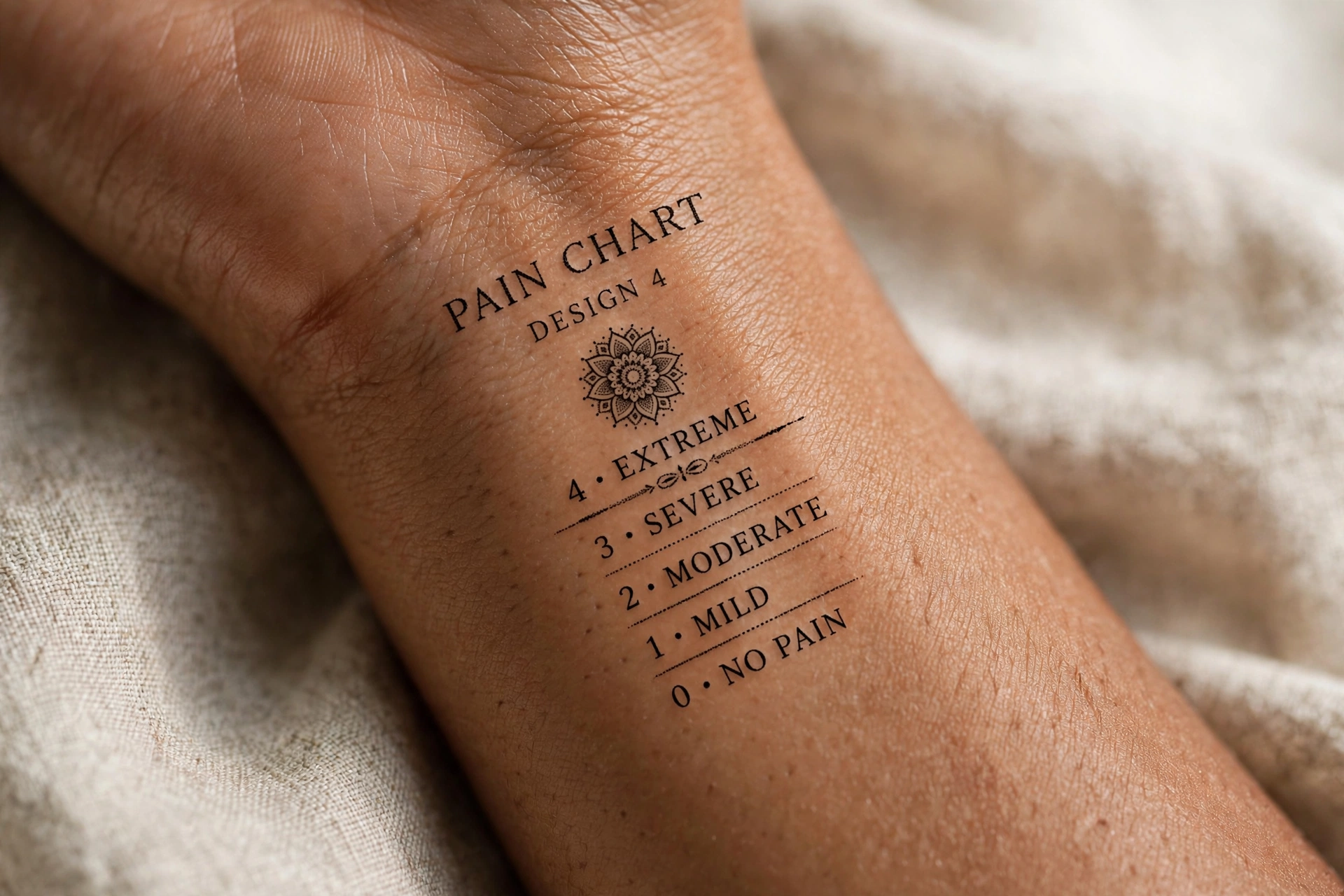
Tattoo Pain Chart: Body Areas Ranked Least to Most Painful
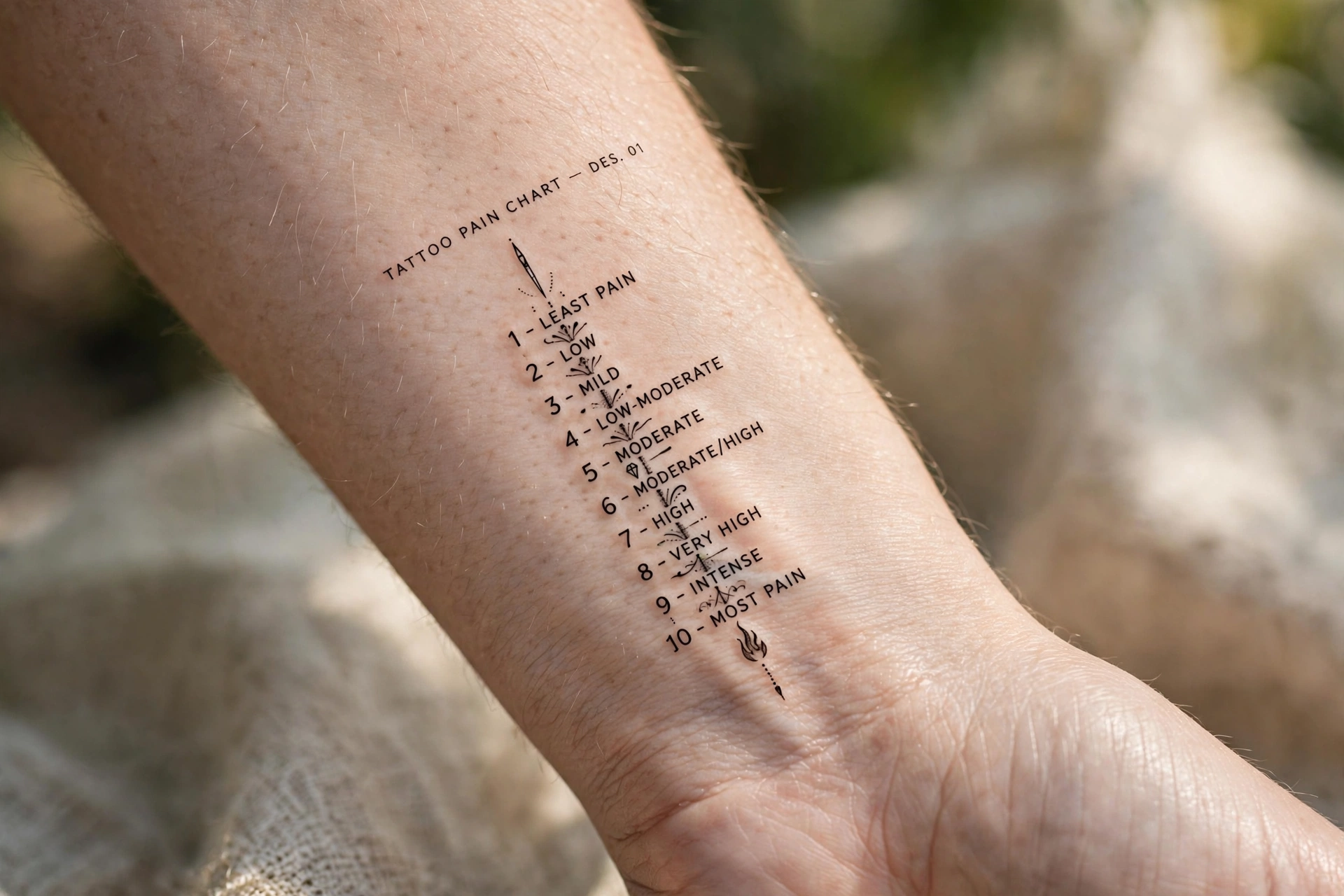
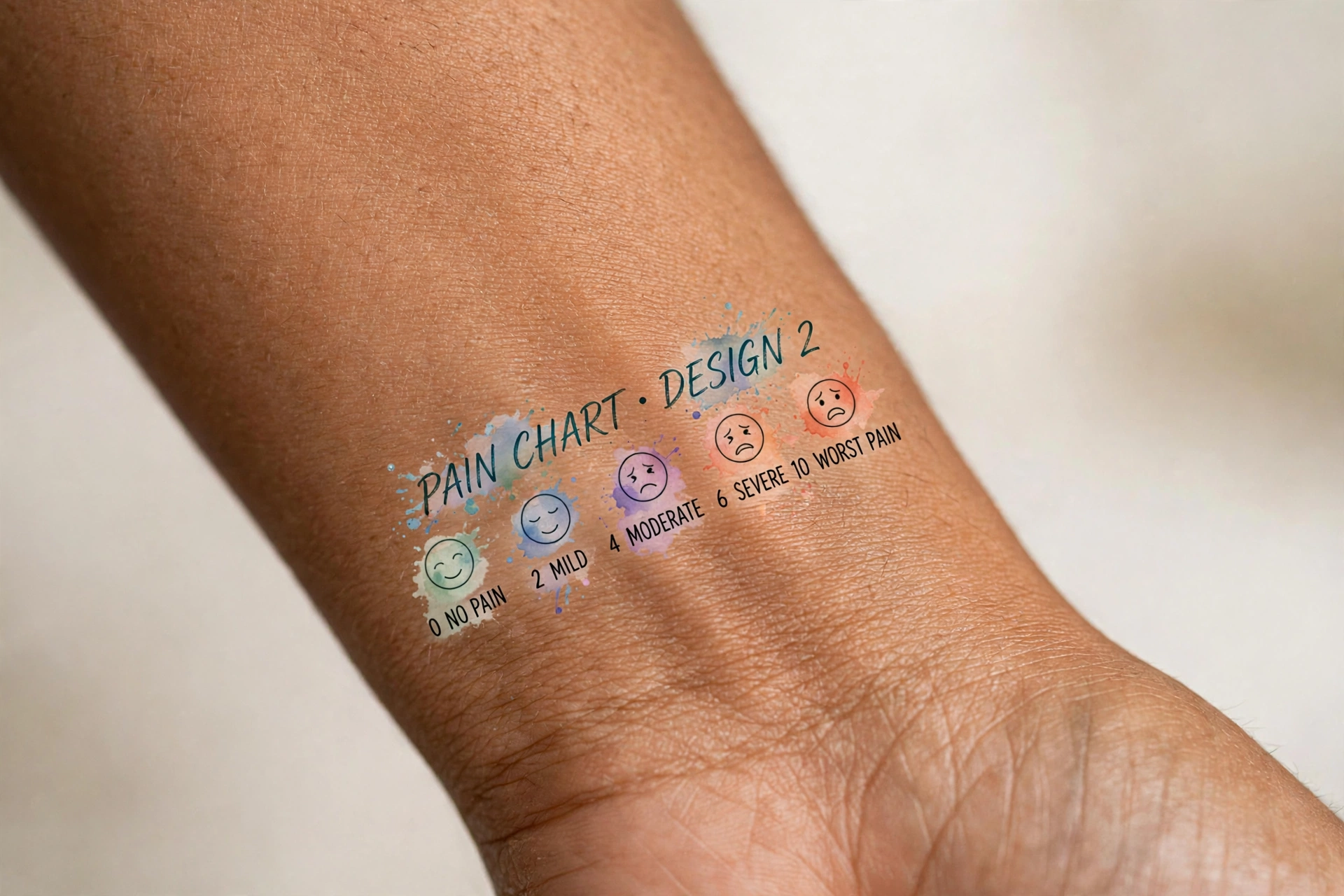
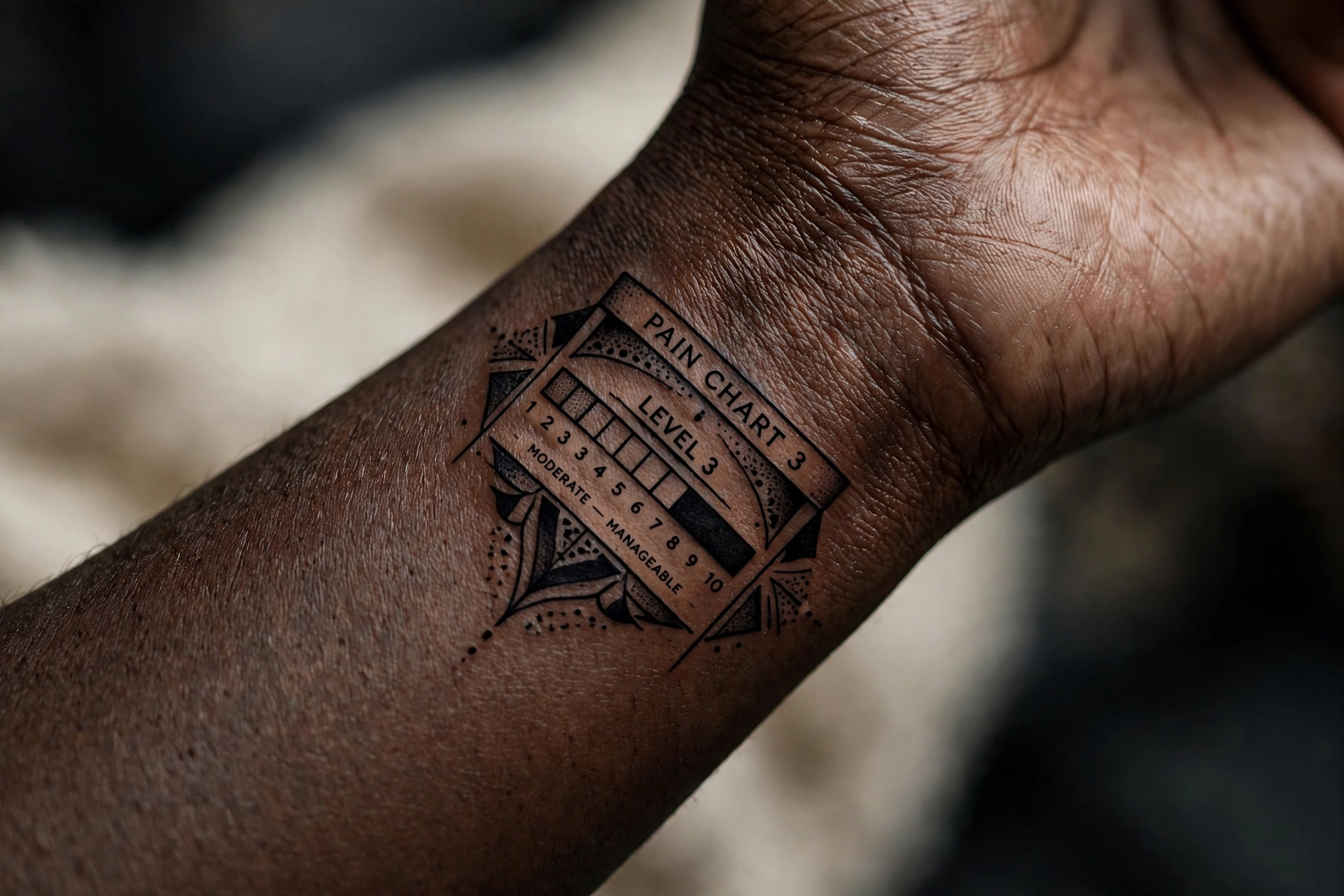
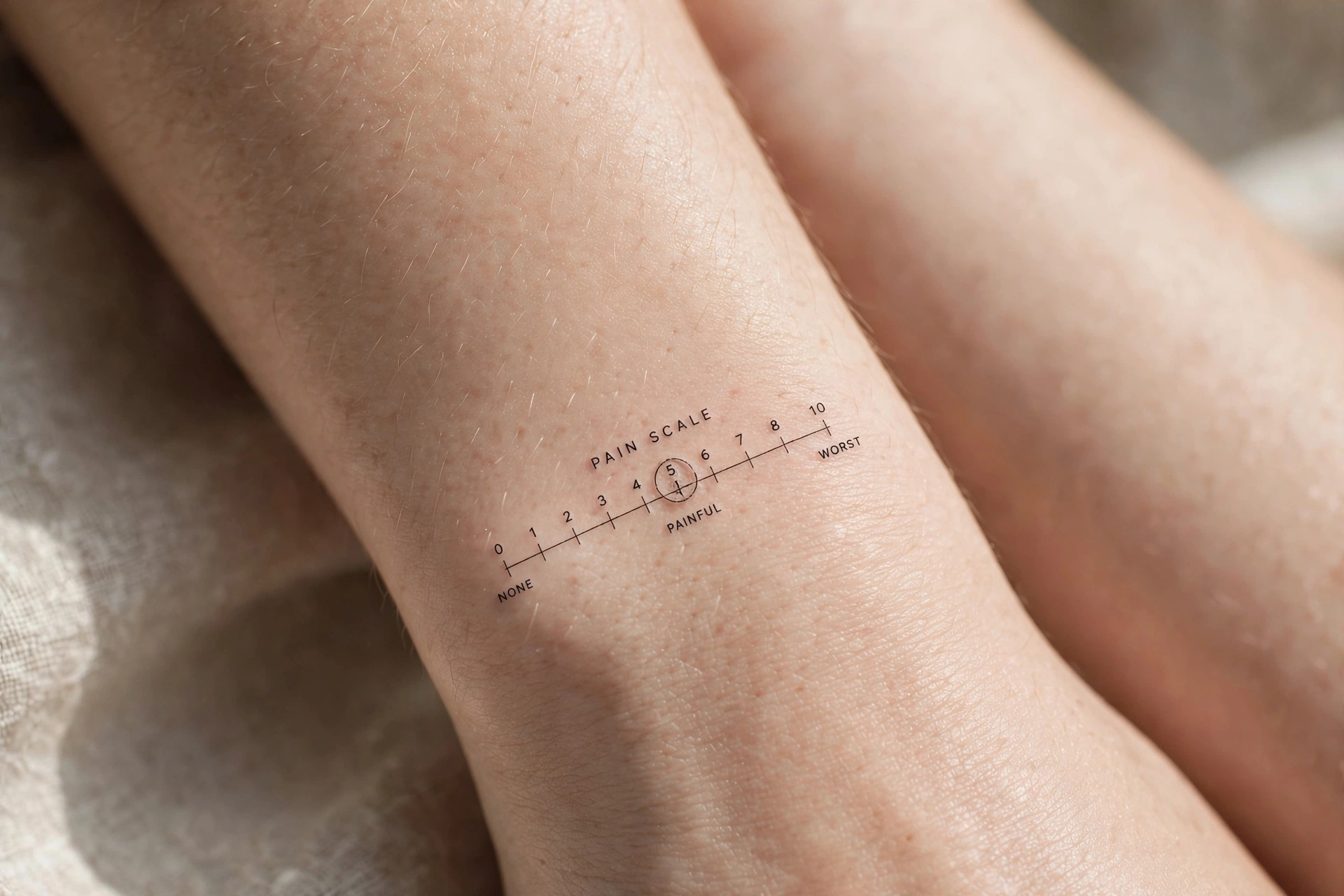
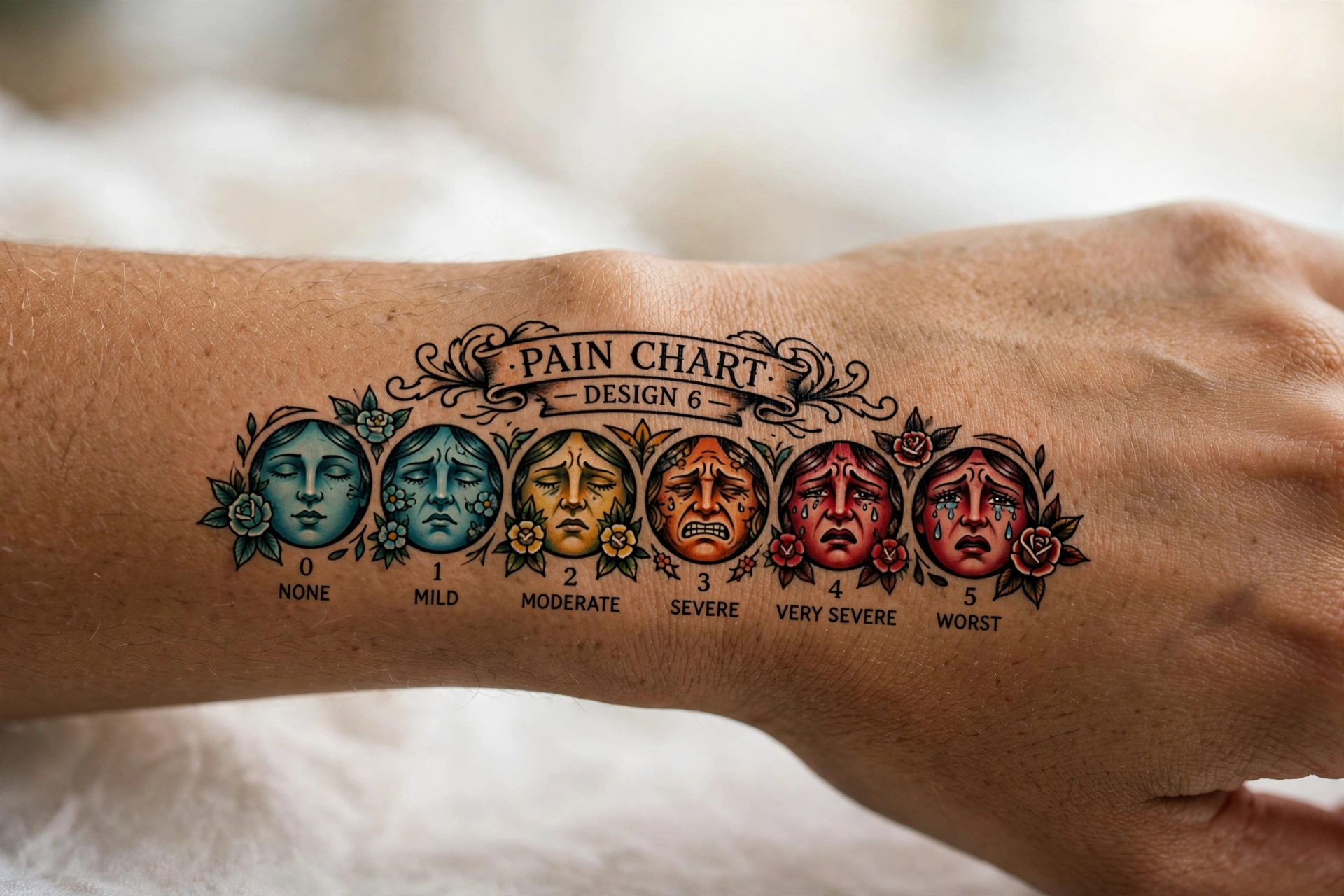
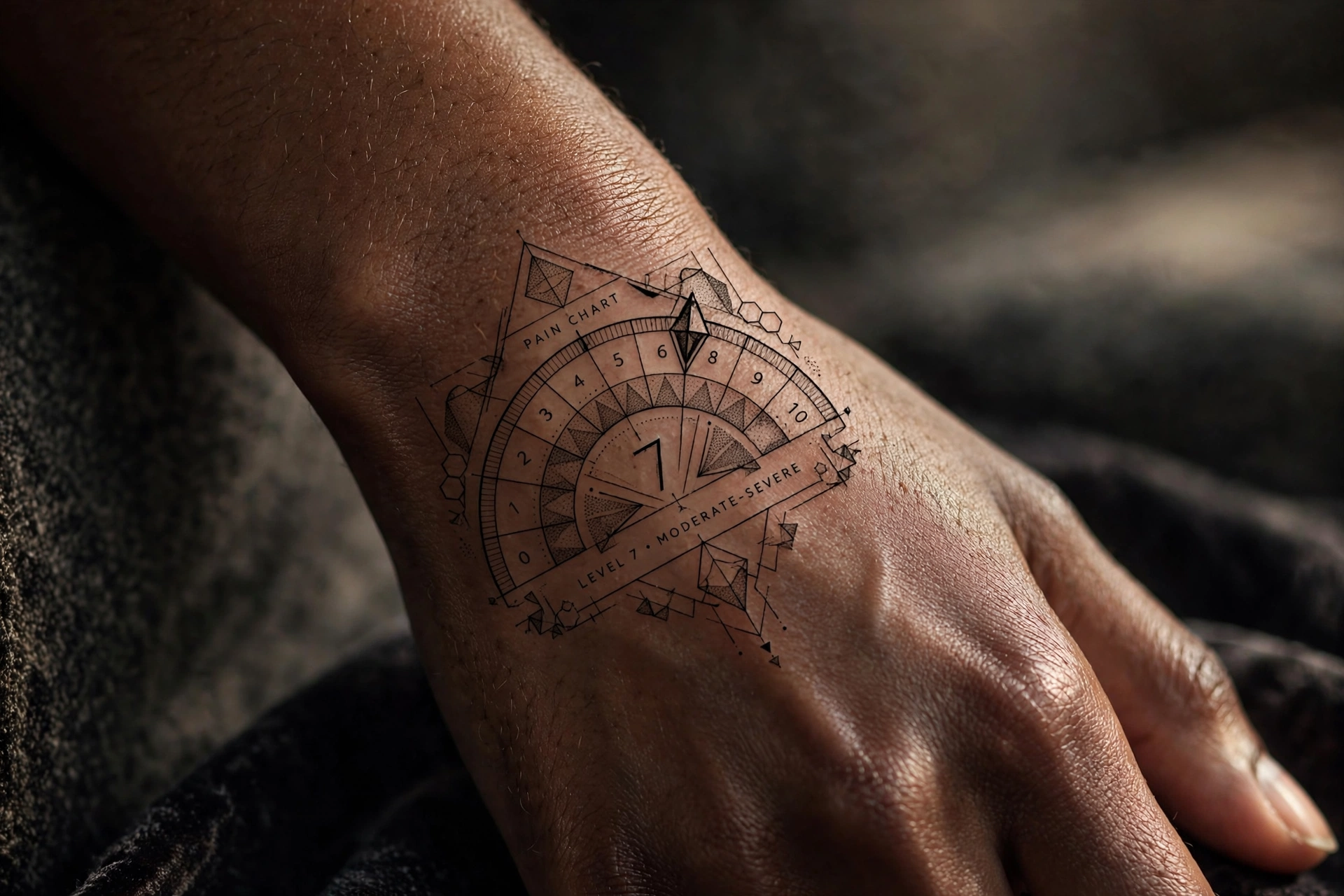
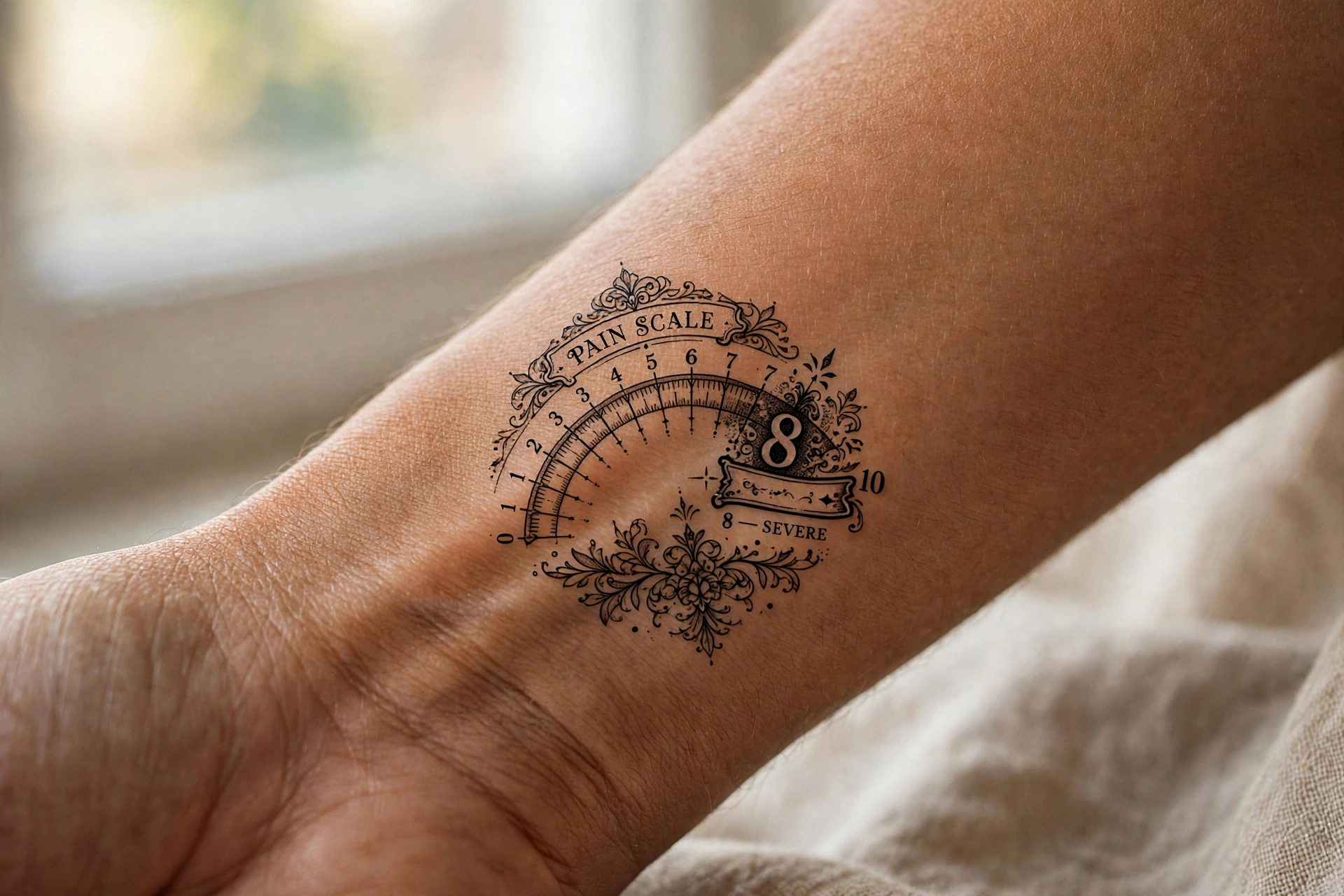
Here is the definitive ranking, based on a 1–10 pain scale where 1 is barely noticeable and 10 is the most intense tattoo pain possible. Keep in mind everyone is different, but this order holds remarkably true across most people.
| Body Area | Pain Level (1–10) | Why It Feels That Way |
|---|---|---|
| Outer thigh | 1–2 | Thick skin, generous muscle and fat padding |
| Buttocks | 1–2 | Plenty of cushioning, few nerve endings |
| Outer upper arm | 2–3 | Muscular, thick skin, easy to relax |
| Forearm | 2–3 | Good muscle coverage, straightforward to sit through |
| Calf | 2–4 | Mostly painless except near the shin bone and back of knee |
| Shoulder | 3–4 | Thick skin; pain rises near the collarbone and shoulder blade edge |
| Upper and middle back | 3–5 | Large flat area, but sensitive along the spine |
| Outer bicep | 3–4 | Comfortable; the inner bicep is a different story |
| Hip (outer) | 3–5 | Moderate; bony hip bone increases the sting |
| Wrist | 4–5 | Thin skin over bone and tendons |
| Inner forearm | 4–5 | Softer, more sensitive skin than the outer forearm |
| Ankle | 4–6 | Thin skin directly over bone with little padding |
| Behind the ear | 4–6 | Bony, plus the buzzing vibration feels strange and intense |
| Chest (men) | 4–6 | Moderate, but very sensitive near the collarbone and sternum |
| Neck (side) | 5–6 | Thin skin with major nerve pathways nearby |
| Inner bicep | 5–7 | Soft, sensitive skin with many nerve endings |
| Hands and fingers | 6–8 | Thin skin, bone close to the surface, constant movement |
| Feet | 6–8 | Bony top of the foot with almost no padding |
| Ribcage | 7–9 | Thin skin over bone that vibrates with every breath |
| Sternum | 7–9 | Directly over bone in the center of the chest |
| Elbow and knee | 8–9 | Almost no flesh; the needle hits close to bone and nerve |
| Armpit | 8–10 | Extremely thin skin packed with nerve endings and glands |
| Groin and inner thigh | 8–10 | The most nerve-dense skin on the body |
Why Placement Matters More Than You Think
Placement does not just decide pain — it affects healing, aging, and how often you will need touch-ups. High-friction areas like hands, feet, and inner lips fade fastest because skin regenerates there quickly. Bony areas swell more and can bruise. Meanwhile, fleshy, low-pain spots like the thigh and upper arm tend to heal smoothly and hold ink beautifully for decades.
For a first tattoo, the sweet spot is a placement that is low on the pain chart and forgiving to heal: the outer thigh, forearm, or outer upper arm. You get to learn what tattoo pain actually feels like (usually far less scary than imagined) without white-knuckling through three hours on your ribs.
What Makes Tattoo Pain Better or Worse
Beyond placement, several factors dial pain up or down. Being well-rested, hydrated, and fed before your session makes a genuine difference — low blood sugar and exhaustion lower your pain tolerance noticeably. Arriving hungover or sleep-deprived is one of the most common reasons sessions feel brutal.
Session length matters too. A 45-minute wrist tattoo and a 5-hour rib piece are completely different experiences. Tattoo style plays a role as well: fine-line single-needle work is generally gentler than heavy blackwork or dense color packing, which requires the artist to work the same skin repeatedly. And your own pain tolerance, stress level, and even the time of day all nudge the needle.
Pain Management Tips That Actually Work
You cannot eliminate tattoo pain, but you can absolutely take the edge off. Eat a solid meal 1–2 hours before your appointment and bring sugary snacks and water — stable blood sugar is your best friend. Wear comfortable clothing that gives your artist easy access to the area, and avoid alcohol for at least 24 hours beforehand (it thins your blood and increases bleeding).
During the session, controlled breathing is the single most effective technique: slow inhales through your nose, long exhales through your mouth, especially when the artist hits a hot spot. Distraction helps enormously — bring headphones, a show, or a friend to chat with. Ask your artist about numbing cream: many shops allow it if you apply it beforehand and discuss it first, though some artists prefer not to work with numbed skin since it can change skin texture. Never take painkillers without checking with your artist, and skip aspirin and ibuprofen right before a session because they thin the blood.
When Pain Means Something Is Wrong
Normal tattoo pain is sharp but manageable, and it stops the moment the machine lifts. Pain that feels wrong — a deep burning, throbbing that worsens days later, or sharp pain paired with spreading redness, heat, or pus — is not part of the process. Those are signs of infection or an allergic reaction and deserve a call to your artist or a doctor, not toughing it out.
Also trust your instincts during the session itself. Feeling dizzy, nauseous, or faint is common, especially for first-timers, and a good artist will pause, get you some sugar and air, and check you are okay. There is no prize for suffering in silence — speak up and your session will go better for it.
FAQs
What is the least painful place to get a tattoo?
The outer thigh is widely considered the least painful spot, thanks to thick skin and plenty of muscle and fat padding. The buttocks, outer upper arm, and forearm are close behind — all excellent choices for a first tattoo.
What is the most painful place to get a tattoo?
The armpit, groin, and inner thigh rank as the most painful areas because of extremely thin, nerve-dense skin. The ribcage, sternum, elbows, and knees are also notoriously intense and best saved for when you know how you handle tattoo pain.
Does tattoo pain get worse the longer the session?
Yes, for most people. Adrenaline carries you through the first hour or two, but fatigue sets in around the 2–3 hour mark and pain tolerance drops. Long sessions are best broken into multiple appointments.
Do numbing creams work for tattoos?
They can take the edge off, but they do not eliminate pain entirely and they wear off mid-session. Always discuss numbing cream with your artist beforehand — some prefer not to work with numbed skin, and applying it incorrectly can affect the result.
Is tattoo pain different for men and women?
Research suggests pain perception varies more by individual than by gender, though hormonal cycles can affect sensitivity — many women report higher sensitivity around menstruation. Placement, artist technique, and your physical state on the day matter far more.
Your Pain, Your Plan
The tattoo pain chart is not meant to scare you — it is meant to empower you. Now you know which spots are gentle, which are spicy, and how to prepare your body and mind for the chair. Thousands of people get tattooed every day, including plenty who walked in terrified and walked out already planning their next one.
Found this guide helpful? Pin it to your tattoo planning board on Pinterest so you have the pain chart handy when choosing your placement — and follow us for more honest, no-fluff tattoo guides.


